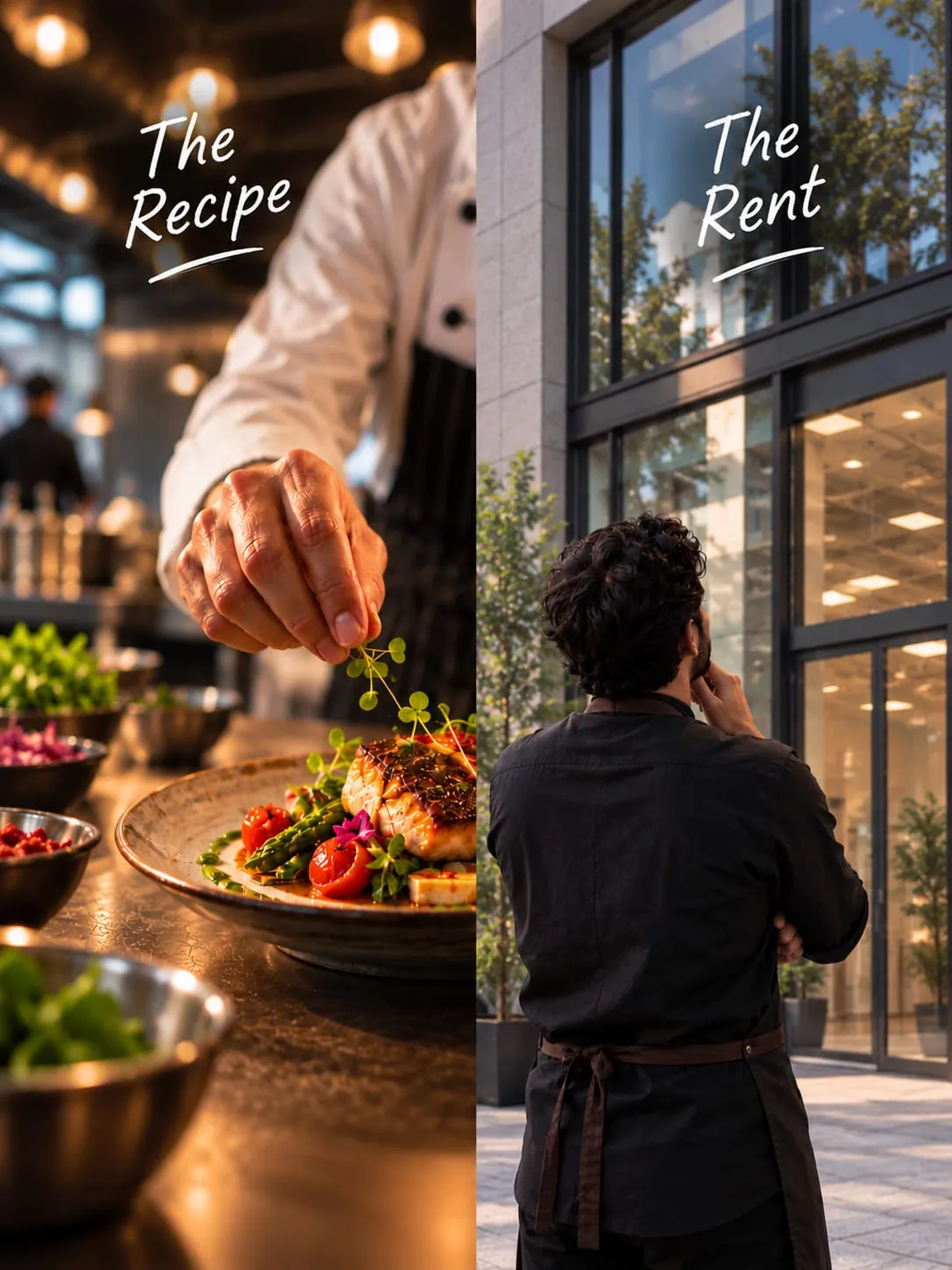
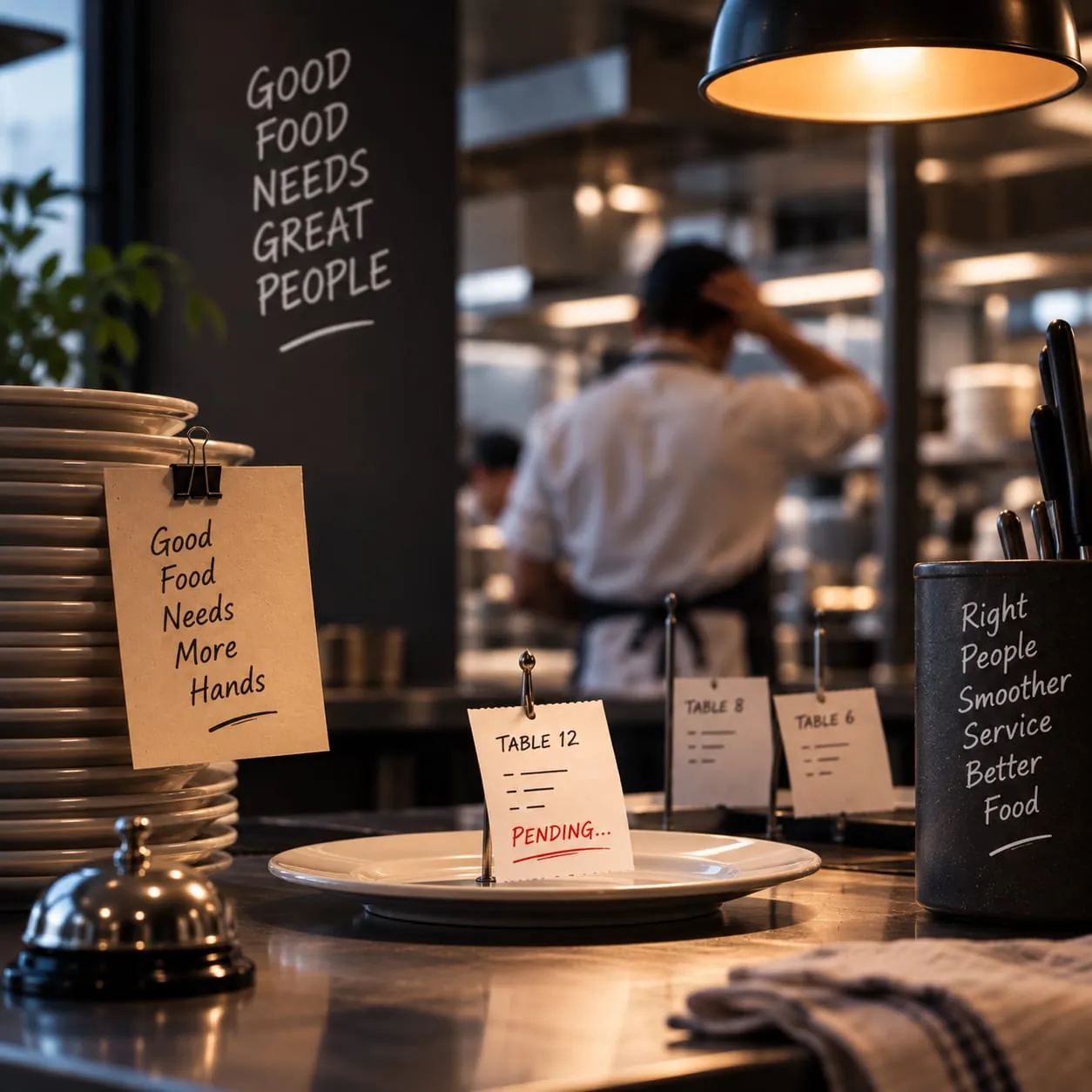
A café cannot run better than the team operating it.
For café owners, staffing is rarely a simple hiring problem. It affects almost every part of the business: service speed, food consistency, customer satisfaction, wastage, operational costs and the owner's own time.
And unlike equipment or furniture, people cannot simply be switched on and expected to perform consistently without training, communication and active management.
The Cost Of An Empty Position
When one person leaves unexpectedly, the immediate problem isn't just the vacant position.
Someone else has to cover the shift.
A manager may need to step onto the floor.
Kitchen staff may have to handle additional responsibilities.
Service becomes slower.
The owner's attention gets pulled away from strategic decisions and back into daily ground operations.
"This is how staffing problems gradually become business problems: when unexpected vacancies consistently drag leadership away from growth and back into fire-fighting."
Hiring Quickly Can Create Another Problem
When a café is short-staffed, there is intense pressure to fill the vacancy immediately. But hiring only for immediate availability creates a compounding cost later.
If the employee isn't properly aligned or isn't suited to the intense pace of hospitality, the business experiences inconsistent service, kitchen errors, repeated training fatigue, and eventually another sudden replacement cycle.
SOPs Reduce Dependence On Individual Employees
One of the most important systems a café can build is a clear, written set of Standard Operating Procedures (SOPs):
Recipes should be documented with precise grammage.
Portions and plating guidelines should be visually defined.
Opening and closing shift checklists should be unambiguous.
Cleaning responsibilities should be clearly assigned.
Customer complaints should follow an established resolution process.
Inventory audit procedures should be completely standardised.
The purpose is simple: The café should not stop functioning because one experienced employee is absent. A well-documented operation makes training predictable and drastically reduces dependency on individual memory.
Cross-Training Creates Operational Flexibility
Café owners must actively consider cross-training team members across selected responsibilities:
A floor employee who understands basic espresso bar operations can provide vital counter support during a sudden rush.
A team member familiar with stock inventory procedures can assist with morning receiving checks.
Kitchen team members can be trained to understand multiple prep stations where practical.
Staff Turnover Has A Hidden Cost
Replacing employees involves significantly more than recruitment expenses:
There is unbillable training time.
There are unavoidable mistakes during the learning curve.
There is morale pressure placed on the remaining staff.
There can be jarring inconsistency in front-of-house customer service.
And management bandwidth is spent rebuilding the exact same knowledge repeatedly.
For an owner, reducing unnecessary turnover has immense commercial value far beyond simply avoiding agency fees or recruitment ads.
The Owner's Role Has To Evolve
Many café owners begin by doing every single task themselves:
Ordering inventory.
Interviewing staff.
Checking stock.
Handling customers.
Supervising the kitchen.
Posting on social media.
Resolving staff grievances.
It can work initially. But if the café is expected to grow or scale to multiple doors, the owner eventually needs systems that allow the business to operate seamlessly without requiring their physical presence for every minor decision.
"That transition — from owner-dependent to system-dependent operations — is the single most critical threshold of café growth."
People Are Not Just A Cost
It is easy to look at payroll purely as an operational expense on the monthly P&L. But skilled, stable employees actively generate enterprise value.
A trained, confident barista protects brewing consistency and repeat morning trade.
An experienced server dramatically elevates average order value and customer retention.
A capable kitchen lead solves operational bottlenecks before they ever reach the owner.
The question isn't simply how much the café spends on payroll. It is what the business consistently receives in return from that human investment.
The strongest staffing strategy isn't about having the biggest roster. It is about having the right people, airtight systems, and enough flexibility to keep the café running effortlessly when the unexpected happens.