
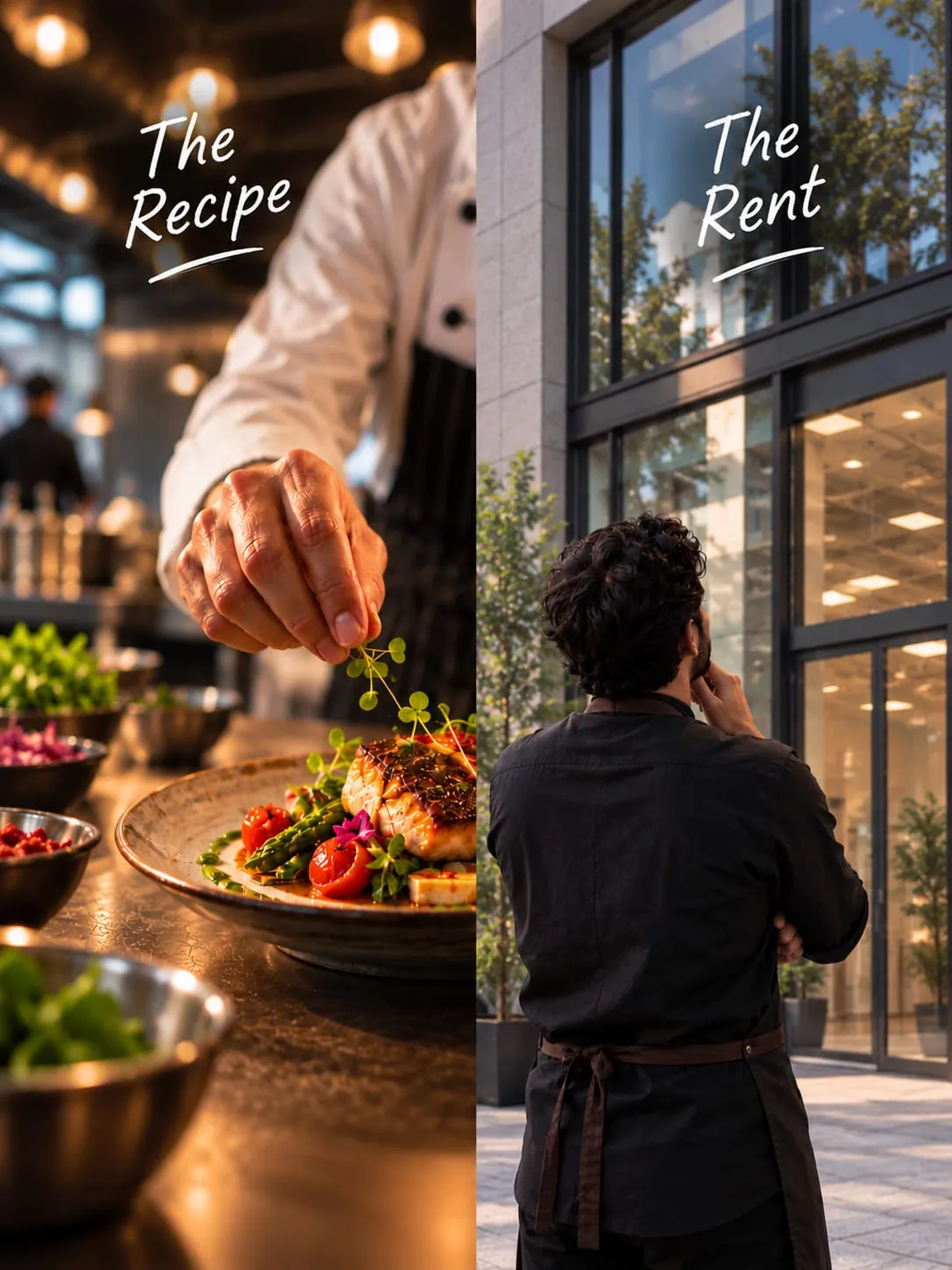
A café may be built around food, but its survival can depend heavily on the space it occupies.
For a café owner, choosing a location is one of the biggest decisions made before opening the doors. The right address can bring visibility, footfall and brand value. The wrong one can turn rent into a fixed pressure that affects every other part of the business.
This is where the conversation around “The Recipe vs. The Rent” begins.
A café may have an excellent menu, strong customer reviews and a beautiful interior. But if the monthly rent is disproportionate to the sales the space can realistically generate, even a popular café can find itself under intense financial pressure.
The Cost Of The Address
Rent is different from many other café expenses because it continues whether the café is busy or not.
On a strong weekend, the café may be full.
On a quiet Tuesday afternoon, the rent is still due.
This makes rent one of the most important fixed costs for a café owner to evaluate before signing a lease.
"The question isn't simply: 'Can I afford this rent?' A far more useful question is: 'Can the business this space can realistically generate support this rent?' That distinction changes how a location is evaluated."
Footfall Doesn't Always Mean Revenue
A busy road can look attractive. A popular commercial area can appear promising. But high pedestrian movement doesn't automatically translate into café customers.
The customer profile matters.
The surrounding businesses matter.
Parking and accessibility matter.
The time of day when the area is active matters.
Most importantly, the people passing by need to be the exact people your café is trying to attract.
The Size Of The Café Has A Price
More space can create more seating, a larger kitchen, better ambience and greater capacity. But every additional square foot comes with a compounding cost.
A larger café also means potentially higher rent, greater utility consumption, more furniture, higher maintenance and a larger floor team. The owner therefore needs to ask whether the additional space is actually generating additional revenue.
If ten extra tables rarely get occupied, the business may be paying for capacity it isn't using. Space should therefore be evaluated not only aesthetically, but commercially.
Rent Eventually Reaches The Menu
Café rent doesn't appear as an ingredient on the menu, but it influences the economics behind every single item being sold.
The selling price of a coffee, meal or dessert has to contribute towards the café's overall operating costs. This doesn't mean increasing prices simply because rent is high — it means understanding whether the pricing, average order value (AOV), customer volume and seating capacity can collectively support the fixed cost structure.
A premium location may require a different business model from a neighbourhood café. A small takeaway-focused outlet may operate differently from a large dine-in space. The menu and the property cannot be planned independently.
The Break-Even Question
Before committing to a location, café owners need to think beyond the monthly rent figure on the contract:
• How many daily customers are realistically needed?
• What average order value (AOV) supports that volume?
• How many seats are available, and what is the realistic table turnover rate?
• How much revenue can the café generate during weekdays compared with peak weekends?
These questions help translate a property decision into a concrete business calculation. Because a location isn't successful simply because it looks good — it is successful when the business operating inside can sustain itself profitably.
The Cheapest Rent Isn't Automatically The Answer Either
Reducing rent can certainly reduce financial pressure, but choosing the cheapest possible property often creates an entirely different problem.
A low-rent location with poor accessibility, limited visibility or insufficient customer demand may save money on the lease while losing significantly more in potential sales.
The objective, therefore, isn't necessarily minimum rent. It is the right rent for the business model. A café owner needs to find the delicate balance between location quality, customer accessibility, space, expected revenue and fixed costs.
Before Signing The Lease
A location should ideally be studied beyond a single daytime visit:
Observe the area at different times of the day.
Look at weekday vs. weekend footfall activity.
Understand the surrounding customer profile.
Check parking ease and pedestrian access.
Study nearby businesses and complementary anchors.
Estimate realistic seating capacity.
Calculate potential average order value.
And most importantly, build a conservative revenue projection rather than relying only on optimism.
"The lease is one of the decisions that will shape the café for years to come. The recipe brings them in. The rent determines how long you can stay."
Food remains at the heart of a café. A strong recipe can attract customers, and a memorable experience creates loyalty. But the physical space has to make commercial sense behind the scenes.
The best location isn't necessarily the most expensive one, the biggest one, or the busiest one. It is the one where the economics of the space actively support the ambition of the café.
Because in hospitality, the question isn't just whether you can create something people want to eat. It is whether the business can afford the place where you are serving it.